Related Search:
Showing posts with label Home Interior Design. Show all posts
Showing posts with label Home Interior Design. Show all posts
Friday, October 15, 2010
Balcony Needs to be Designed
Balcony needs to be designed in such a way that it ensures the safety of your child. This wrought iron balcony grille by Madeley Designs is made as per the safety norms. The gaps are also not too big which protects your child from slipping down: coz children generally tend to play most of the times in the balcony as it gives them a wider space and also coz they find it very interesting to climb up the iron bars. Gather some seating , Add some greenery , Lay outdoor flooring Follow this Blog Networks Related Search: Balcony, an amazing place for viewing your home Modern Bathroom Designs from Rexa Luxury Bedroom Designs | Bedroom interiors Minimalism in visual art Modern furniture and kitchen design Modern furniture combined with good interior design Small One Room Apartment Interior Design Inspiratif Minimalist design Home Design Interior Minimalist Design House with Black Parallel concre

Thursday, October 7, 2010
Le Corbusier’s Collection for Children by Living Jewels

Yes! Another company is creating smaller-scale versions of the iconic furniture of Le Corbusier’s famous Le Grand collection. Living Jewels of Germany has introduced scaled down and lowered versions of these classics for use in spaces such as children’s rooms. The collection includes single seat, double seat and a day bed in stunning color options.
Related Search :
Friday, September 24, 2010
Modern Minimalist House Design Inspiration
This is another modern and minimalist house design for your inspiration of planning your home. This house façade processed consist of playful square sectors, ordered forward and backward. One of wall part intent to made higher, like tower and decorated with wooden pergola, so become attractive accent.


Almost of front house surface dominated with wide windows and simple covered passageway, in order to get wide view and maximize natural light, beside get fresh air circulation. Foyer is for formal guest, informal guest (friends) received in family room that unity with dining room and pantry. This house has unique area, inner courtyard with two floor void and skylight. Beside of that there is open area in first floor, consist of sitting room and water fountain, surrounded with foyer, stairs, dining and family room, only partitioned with fold glass door.

Monday, September 20, 2010
Minimalism in visual art
Minimalism in visual art, sometimes referred to as literalist art[3] and ABC Art[4] emerged in New York in the 1960s. It is regarded as a reaction against the painterly forms of Abstract Expressionism as well as the discourse, institutions and ideologies that supported it. As artist and critic Thomas Lawson noted in his 1977 catalog essay Last Exit: Painting, minimalism did not reject Clement Greenberg's claims about Modernist Painting's reduction to surface and materials so much as take his claims literally. Minimalism was the result, even though the term "minimalism" was not generally embraced by the artists associated with it, and many practitioners of art designated minimalist by critics did not identify it as a movement as such.


In contrast to the Abstract Expressionists, Minimalists were influenced by composers John Cageand LaMonte Young, poet William Carlos Williams, and the landscape architect Frederick Law Olmsted. They very explicitly stated that their art was not self-expression, in opposition to the previous decade's Abstract Expressionists. In general, Minimalism's features included geometric, often cubic forms purged of much metaphor, equality of parts, repetition, neutral surfaces, and industrial materials.
Robert Morris, an influential theorist and artist, wrote a three part essay, "Notes on Sculpture 1-3", originally published across three issues of Artforum in 1966. In these essays, Morris attempted to define a conceptual framework and formal elements for himself and one that would embrace the practices of his contemporaries. These essays paid great attention to the idea of the gestalt - "parts... bound together in such a way that they create a maximum resistance to perceptual separation." Morris later described an art represented by a "marked lateral spread and no regularized units or symmetrical intervals..." in "Notes on Sculpture 4: Beyond Objects", originally published in Artforum, 1969, continuing to say that "indeterminacy of arrangement of parts is a literal aspect of the physical existence of the thing." The general shift in theory of which this essay is an expression suggests the transitions into what would later be referred to as Postminimalism.
One of the first artists specifically associated with Minimalism was the painter, Frank Stella, whose early "stripe" paintings were highlighted in the 1959 show, "16 Americans", organized by Dorothy Miller at the Museum of Modern Artin New York. The width of the stripes in Frank Stellas's stripe paintings were determined by the dimensions of the lumber, visible as the depth of the painting when viewed from the side, used to construct the supportive chassis upon which the canvas was stretched. The decisions about structures on the front surface of the canvas were therefore not entirely subjective, but pre-conditioned by a "given" feature of the physical construction of the support. In the show catalog, Carl Andre noted, "Art excludes the unnecessary. Frank Stella has found it necessary to paint stripes. There is nothing else in his painting." These reductive works were in sharp contrast to the energy-filled and apparently highly subjective and emotionally-charged paintings of Willem de Kooning or Franz Kline and, in terms of precedent among the previous generation of abstract expressionists, leaned more toward less gestural, often somber coloristic field paintings of Barnett Newmanand Mark Rothko. Although Stella received immediate attention from the MOMA show, artists like Kenneth Noland, Ralph Humphrey, Robert Motherwell and Robert Ryman had begun to explore stripes, monochromatic and Hard-edge formats from the late 50s through the 1960s.[5]
Because of a tendency in Minimalism to exclude the pictorial, illusionistic and fictive in favor of the literal, there was a movement away from painterly and toward sculptural concerns. Donald Judd had started as a painter, and ended as a creator of objects. His seminal essay, "Specific Objects" (published in Arts Yearbook 8, 1965), was a touchstone of theory for the formation of Minimalist aesthetics. In this essay, Judd found a starting point for a new territory for American art, and a simultaneous rejection of residual inherited European artistic values. He pointed to evidence of this development in the works of an array of artists active in New York at the time, including Jasper Johns, Dan Flavin and Lee Bontecou. Of "preliminary" importance for Judd was the work of George Ortman [1], who had concretized and distilled painting's forms into blunt, tough, philosophically charged geometries. These Specific Objects inhabited a space not then comfortably classifiable as either painting or sculpture. That the categorical identity of such objects was itself in question, and that they avoided easy association with well-worn and over-familiar conventions, was a part of their value for Judd.
In a much more broad and general sense, one might, in fact, find European roots of Minimalism in the geometric abstractions painters in theBauhaus, in the works of Piet Mondrian and other artists associated with the movement DeStijl, in Russian Constructivists and in the work of the Romanian sculptor Constantin Brâncuşi.
Piet Mondrian, Composition No. 10, 1939-42, oil on canvas, 80 x 73 cm, private collection.
This movement was heavily criticised by high modernist formalist art critics and historians. Some anxious critics thought Minimalist art represented a misunderstanding of the modern dialectic of painting and sculpture as defined by critic Clement Greenberg, arguably the dominant American critic of painting in the period leading up to the 1960s. The most notable critique of Minimalism was produced by Michael Fried, a Greenbergian critic, who objected to the work on the basis of its "theatricality". In Art and Objecthood (published in Artforum in June 1967) he declared that the Minimalist work of art, particularly Minimalist sculpture, was based on an engagement with the physicality of the spectator. He argued that work like Robert Morris's transformed the act of viewing into a type of spectacle, in which the artifice of the act observation and the viewer'sparticipation in the work were unveiled. Fried saw this displacement of the viewer's experience from an aesthetic engagement within, to an event outside of the artwork as a failure of Minimal art. Fried's opinionated essay was immediately challenged by artist Robert Smithson in a letter to the editor in the October issue of Artforum. Smithson stated the following: "What Fried fears most is the consciousness of what he is doing--namely being himself theatrical."
Other Minimalist artists include: Richard Allen, Walter Darby Bannard, Larry Bell, Ronald Bladen,Mel Bochner, Norman Carlberg, Erwin Hauer, Dan Flavin, Sol LeWitt, Brice Marden, Agnes Martin,Jo Baer, John McCracken, Paul Mogensen, David Novros, Ad Reinhardt, Fred Sandback, Richard Serra, Tony Smith, Robert Smithson, and Anne Truitt.
Ad Reinhardt, actually an artist of the Abstract Expressionist generation, but one whose reductive nearly all-black paintings seemed to anticipate minimalism, had this to say about the value of a reductive approach to art: "The more stuff in it, the busier the work of art, the worse it is. More is less. Less is more. The eye is a menace to clear sight. The laying bare of oneself is obscene. Art begins with the getting rid of nature."
In contrast to the Abstract Expressionists, Minimalists were influenced by composers John Cageand LaMonte Young, poet William Carlos Williams, and the landscape architect Frederick Law Olmsted. They very explicitly stated that their art was not self-expression, in opposition to the previous decade's Abstract Expressionists. In general, Minimalism's features included geometric, often cubic forms purged of much metaphor, equality of parts, repetition, neutral surfaces, and industrial materials.
Robert Morris, an influential theorist and artist, wrote a three part essay, "Notes on Sculpture 1-3", originally published across three issues of Artforum in 1966. In these essays, Morris attempted to define a conceptual framework and formal elements for himself and one that would embrace the practices of his contemporaries. These essays paid great attention to the idea of the gestalt - "parts... bound together in such a way that they create a maximum resistance to perceptual separation." Morris later described an art represented by a "marked lateral spread and no regularized units or symmetrical intervals..." in "Notes on Sculpture 4: Beyond Objects", originally published in Artforum, 1969, continuing to say that "indeterminacy of arrangement of parts is a literal aspect of the physical existence of the thing." The general shift in theory of which this essay is an expression suggests the transitions into what would later be referred to as Postminimalism.
One of the first artists specifically associated with Minimalism was the painter, Frank Stella, whose early "stripe" paintings were highlighted in the 1959 show, "16 Americans", organized by Dorothy Miller at the Museum of Modern Artin New York. The width of the stripes in Frank Stellas's stripe paintings were determined by the dimensions of the lumber, visible as the depth of the painting when viewed from the side, used to construct the supportive chassis upon which the canvas was stretched. The decisions about structures on the front surface of the canvas were therefore not entirely subjective, but pre-conditioned by a "given" feature of the physical construction of the support. In the show catalog, Carl Andre noted, "Art excludes the unnecessary. Frank Stella has found it necessary to paint stripes. There is nothing else in his painting." These reductive works were in sharp contrast to the energy-filled and apparently highly subjective and emotionally-charged paintings of Willem de Kooning or Franz Kline and, in terms of precedent among the previous generation of abstract expressionists, leaned more toward less gestural, often somber coloristic field paintings of Barnett Newmanand Mark Rothko. Although Stella received immediate attention from the MOMA show, artists like Kenneth Noland, Ralph Humphrey, Robert Motherwell and Robert Ryman had begun to explore stripes, monochromatic and Hard-edge formats from the late 50s through the 1960s.[5]
Because of a tendency in Minimalism to exclude the pictorial, illusionistic and fictive in favor of the literal, there was a movement away from painterly and toward sculptural concerns. Donald Judd had started as a painter, and ended as a creator of objects. His seminal essay, "Specific Objects" (published in Arts Yearbook 8, 1965), was a touchstone of theory for the formation of Minimalist aesthetics. In this essay, Judd found a starting point for a new territory for American art, and a simultaneous rejection of residual inherited European artistic values. He pointed to evidence of this development in the works of an array of artists active in New York at the time, including Jasper Johns, Dan Flavin and Lee Bontecou. Of "preliminary" importance for Judd was the work of George Ortman [1], who had concretized and distilled painting's forms into blunt, tough, philosophically charged geometries. These Specific Objects inhabited a space not then comfortably classifiable as either painting or sculpture. That the categorical identity of such objects was itself in question, and that they avoided easy association with well-worn and over-familiar conventions, was a part of their value for Judd.
In a much more broad and general sense, one might, in fact, find European roots of Minimalism in the geometric abstractions painters in theBauhaus, in the works of Piet Mondrian and other artists associated with the movement DeStijl, in Russian Constructivists and in the work of the Romanian sculptor Constantin Brâncuşi.
Piet Mondrian, Composition No. 10, 1939-42, oil on canvas, 80 x 73 cm, private collection.
This movement was heavily criticised by high modernist formalist art critics and historians. Some anxious critics thought Minimalist art represented a misunderstanding of the modern dialectic of painting and sculpture as defined by critic Clement Greenberg, arguably the dominant American critic of painting in the period leading up to the 1960s. The most notable critique of Minimalism was produced by Michael Fried, a Greenbergian critic, who objected to the work on the basis of its "theatricality". In Art and Objecthood (published in Artforum in June 1967) he declared that the Minimalist work of art, particularly Minimalist sculpture, was based on an engagement with the physicality of the spectator. He argued that work like Robert Morris's transformed the act of viewing into a type of spectacle, in which the artifice of the act observation and the viewer'sparticipation in the work were unveiled. Fried saw this displacement of the viewer's experience from an aesthetic engagement within, to an event outside of the artwork as a failure of Minimal art. Fried's opinionated essay was immediately challenged by artist Robert Smithson in a letter to the editor in the October issue of Artforum. Smithson stated the following: "What Fried fears most is the consciousness of what he is doing--namely being himself theatrical."
Other Minimalist artists include: Richard Allen, Walter Darby Bannard, Larry Bell, Ronald Bladen,Mel Bochner, Norman Carlberg, Erwin Hauer, Dan Flavin, Sol LeWitt, Brice Marden, Agnes Martin,Jo Baer, John McCracken, Paul Mogensen, David Novros, Ad Reinhardt, Fred Sandback, Richard Serra, Tony Smith, Robert Smithson, and Anne Truitt.
Ad Reinhardt, actually an artist of the Abstract Expressionist generation, but one whose reductive nearly all-black paintings seemed to anticipate minimalism, had this to say about the value of a reductive approach to art: "The more stuff in it, the busier the work of art, the worse it is. More is less. Less is more. The eye is a menace to clear sight. The laying bare of oneself is obscene. Art begins with the getting rid of nature."
Sunday, September 19, 2010
Minimalist design

Architect Ludwig Mies van der Rohe adopted the motto "Less is more" to describe his aesthetic tactic of arranging the numerous necessary components of a building to create an impression of extreme simplicity, by enlisting every element and detail to serve multiple visual and functional purposes (such as designing a floor to also serve as the radiator, or a massive fireplace to also house the bathroom). Designer Buckminster Fuller adopted the engineer's goal of "Doing more with less", but his concerns were oriented towards technology and engineering rather than aesthetics. A similar sentiment was industrial designer Dieter Rams' motto, "Less but better" adapted from van der Rohe. The structure uses relatively simple elegant designs; ornamentations are quality rather than quantity[dubious – discuss]. The structure's beauty is also determined by playing with lighting, using the basic geometric shapes as outlines, using only a single shape or a small number of like shapes for components for design unity, using tasteful non-fussy bright color combinations, usually natural textures and colors, and clean and fine finishes. Using sometimes the beauty of natural patterns on stone cladding and real wood encapsulated within ordered simplified structures, and real metal producing a simplified but prestigious architecture and interior design. May use color brightness balance and contrast between surface colors to improve visual aesthetics. The structure would usually have industrial and space age style utilities (lamps, stoves, stairs, technology, etcetera), neat and straight components (like walls or stairs) that appear to be machined with machines, flat or nearly flat roofs, pleasing negative spaces, and large windows to let in lots of sunlight. This and science fiction may have contributed to the late twentieth century futuristic architecture design, and modern home decor. Modern minimalist home architecture with its unnecessary internal walls removed may have led to the popularity of the open plan kitchen and living room style.
Another modernmaster who exemplifies reductivist ideas is Luis Barragán. In minimalism, the architecturaldesigners pay special attention to the connection between perfect planes, elegant lighting, and careful consideration of the void spaces left by the removal of three-dimensional shapes from an architectural design. The more attractive looking minimalist home designs are not truly minimalist, because these use more expensive building materials and finishes, and are relatively larger.
Contemporary architects working in this tradition include John Pawson, Eduardo Souto de Moura, Álvaro Siza Vieira, Tadao Ando, Alberto Campo Baeza, Yoshio Taniguchi, Peter Zumthor, Hugh Newell Jacobsen, Vincent Van Duysen, Claudio Silvestrin, Michael Gabellini, andRichard Gluckman.[2]
The term minimalism is also used to describe a trend in design and architecture where in the subject is reduced to its necessary elements. Minimalist design has been highly influenced by Japanese traditional design and architecture. In addition, the work of De Stijl artists is a major source of reference for this kind of work. De Stijl expanded the ideas that could be expressed by using basic elements such as lines and planes organized in very particular manners.source
Thursday, September 9, 2010
Yorkshire Garden Design - Home Garden


This house is very dynamic and powerful to be home and gardens there are many gardens, how this reference? hopefully help
Sunday, June 20, 2010
Interior Design - Luxury interiors
Before you start considering spending your hard earned money on decorators and interior designers maybe you should consider carrying out the work yourself.
 Modern Home Interior Decoration Ideas
You will find it fun and exhilarating , watch your home come alive with your designs and ideas. If you want to redecorate your entire home interior design software might be the way forward for you, especially if you don't want to hire a decorator.

Thursday, June 17, 2010
Best Interior Design Collection of Small Kitchen

This is luxurious and stylish small kitchen interior design for your home ideas. This is best collection of modern kitchen in minimalist area. Small kitchen can be decoration for the beautiful place in your home. With the small kitchen you can choose the kitchen set, sinks, and other kitchen need suitable with kitchen area.


for more information, visit channel4 site
Saturday, May 29, 2010
A Romantic Bedroom Should Appeal to All Five Senses
Practical tips turn your bedroom into a love nest

(ARA) - A romantic bedroom should please all of the senses. To enhance intimacy and comfort, the Better Sleep Council offers tips and advice on how to transform your bedroom into a love nest that appeals to each of your five senses.
1. Touch. The bed is the focus of any bedroom and the most romantic rooms make it as cozy as possible. Luxurious sheets and plush pillows are wonderful, but the real key is a comfortable mattress, so make sure to have one that feels heavenly and caresses both you and your partner.
2. Sight. Lighting should be soft and filtered; bright lights can detract from the ambience. Use lower wattage light bulbs or those with a soft pink hue. And, for special evenings, nothing adds romance like the warm glow of candles (be sure that lit candles are never left unattended).3. Smell. Gently wiping your light bulbs with a thin coat of perfumed oil can send calming or sensual scents throughout the bedroom. In addition, sprinkling dusting powder on your sheets can make them fragrant and silky. Scented sachets of lavender and rosemary also add to the air of romance.4. Sound. Keep your favorite CDs at your fingertips; soft music is one of the easiest ways to elevate your mood. If it's noisy outside your bedroom window, hang thick curtains to muffle the sound. A peaceful bedroom retreat is the place to focus on each other, so keep distractions such as the television in another room.5. Taste. For a late-night indulgence, place strawberries and whipped cream on a small tray next to the bed. Champagne and champagne glasses also are ideal at the start of a romantic evening at home.
"Evaluate your bedroom, starting with the sense of touch, making sure your bed and mattress are as comfortable as possible. Then, consider the rest of the senses. Because a romantic bedroom can set the mood for the evening, don't risk having an uncomfortable bed or a noisy bedroom destroy the moment," says Andrea Herman, director of the Better Sleep Council.
Friday, May 28, 2010
Creative Ideas for Decorating a Small Apartment
 Decorating an apartment can be a challenge, especially when management does not allow painting or wallpapering. Some apartment dwellers are stuck with stark white walls, and the absence of color can be just as depressing as darkness. With a little ingenuity and a few creative ideas for decorating a small apartment, it can feel more like your very own space, and it will seem more spacious than ever. Consider the following creative ideas for decorating a small apartment, and turn your small apartment into a decorative, roomy, and inviting abode.
Furniture Choices
When considering a small apartment, opt for smaller pieces of well designed furniture, and avoid overfilling the rooms. A small apartment will seem cluttered and smaller than ever if every wall is lined with furniture and if open spaces are overdone. Arrange furniture to keep the rooms as open as possible, and do away with furniture you can live without. It is better to keep a few stylish folding chairs in a closet to accommodate extra guests than to fill the rooms with an overabundance of furniture.
Less is More
A hodgepodge of wall décor and knickknacks can make a small apartment look and feel cluttered. Downsize collections, and display a few favorites instead of completely covering the walls. Less is truly more when decorating a home, and cluttering walls and shelves with too many items is distracting. The eyes do not know where to focus, and it ends up looking more like a mess than a collection.
A hodgepodge of wall décor and knickknacks can make a small apartment look and feel cluttered. Downsize collections, and display a few favorites instead of completely covering the walls. Less is truly more when decorating a home, and cluttering walls and shelves with too many items is distracting. The eyes do not know where to focus, and it ends up looking more like a mess than a collection.
The Magic of Mirrors
One of the easiest ways to decorate a small apartment and make it appear more spacious is with mirrors. To make a small room appear more spacious, mount beautiful framed mirrors on opposite walls. They will reflect natural as well as artificial light and make the room appear naturally larger. Decorative wall mirrors are available in countless styles to meet every decorating budget and preference, and they are ideal for decorating bare walls.
One of the easiest ways to decorate a small apartment and make it appear more spacious is with mirrors. To make a small room appear more spacious, mount beautiful framed mirrors on opposite walls. They will reflect natural as well as artificial light and make the room appear naturally larger. Decorative wall mirrors are available in countless styles to meet every decorating budget and preference, and they are ideal for decorating bare walls.
Once your small apartment is decorated with attractive wall hangings, strategically placed mirrors, and well placed furniture, it will feel comfortable, inviting, and more spacious. Keep in mind that it is not the size of a home that matters. Even larger rentals will not seem as roomy or as classy when furniture is poorly arranged and walls are overdone or bare. Use your unique style along with the aforementioned decorating tips to turn your small apartment into a comfortable and stylish place to call home.
Thursday, May 27, 2010


Monday, May 24, 2010
Hillside Residence is a Sustainable Gem in the Marin Hills Read more: Hillside Residence is a Sustainable Gem in the Marin Hills | Inhabitat - Green Design Will Save the World

For almost as long as they’ve known each other, Scott and Tracy Lee have been designing and building the Hillside Residence, a sustainable gem in the Marin Hills. The house represents their personal merger — or marriage — as much as that of their professional talents. Scott is the principal at SB Architects and Tracy is vice president of spa development for Auberge Resorts. Their house, which was featured in the AIA San Francisco’s Marin homes tour, blends modern and green architectural influences with a spa’s love affair with wood.


Built into a hillside, as the name implies, the house consists of four small stories, totaling just 2,116 square feet. There’s a basement, a floor with a guest bedroom, a child’s bedroom, and a tiny nursery. The master bedroom gets its own level, and capping it all off is the living area, whose height earns it an exquisite view of woods and the San Francisco Bay.

Then again, it’s hard to say where the house’s square footage ends, because it moves so seamlessly between airy indoor spaces and partially enclosed outdoor spaces — which include a patio, a couple of outdoor showers, and an almost entirely enclosed porch, complete with a fireplace for weathering Marin County’s coolfoggy nights.
Did I mention the wood? If you’ve ever doubted that recycled wood can be lush, and even alluring, the Hillside Residence will banish that thought. All of the home’s abundant exposed wood is Douglas Fir, salvaged from a single seed plant in Idaho. It’s the DNA of the house’s character, and links it to its surroundings, connecting it visually with the redwood porch swing in the portico to suggest Mill Valley’s logging past.
Sunday, May 23, 2010
Luxury Bedroom Designs | Bedroom interiors
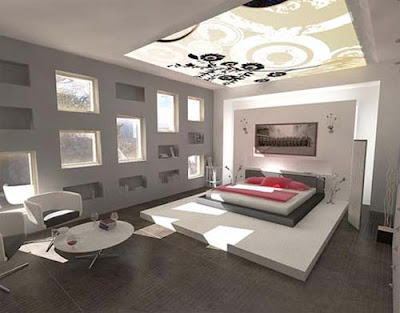
Are you need modern bedroom design for your interior home. bedroom as place for relax and spending much time on it we have to make our bedroom as comfortable place for sleeping.These are few modern bedroom which may inspired you to get your imagination.This modern bedroom design with variegated wood furniture and furnishings for a pleasantly mixed aesthetic experience. At the opposite end of the spectrum, how would you like to have your bedroom be in the middle of your pool room? You would have to loving swimming to be willing to deal with the moisture issues and harsh lighting that would come with this design strategy.
Friday, May 14, 2010
Design tips for smaller bathrooms
If you have a smaller area designated for bathroom use, you will have to make some adjustments in order to make proper use of this space.Start by figuring out what things you need to have in your bathroom. For instance, if you aren’t planning to spend a lot of time in your bathroom, you can install just the main necessary equipments and items in order to feel comfortable. Another important factor is the wise choice of color because a pastel and light color is likely to make your bathroom look larger. The lighter shades are also more welcoming.
Even if your bathroom is small, you can still make it look quite elegant by using the right visual accents. You should use subtle wallpapers that can make your bathroom look larger. Floor coloring is another important issue and you should go for neutral or light colors in order to make the space look roomier. Light shades of blues, tans or grays are the best choices for a small bathroom because they can make it look more airy and sophisticated.
A small bathroom space should be lighted up with additional lights. If you notice that there is no space for such additional lights in your bathroom, you should go for the bulbs that provide a high wattage. These bulbs will make your bathroom very inviting and brighter. Don’t worry about decorating your bathroom either because even a smaller place is likely to be well decorated once you follow the right steps.
Start by using only a few mirrors because overdoing with mirrors is likely to provide your bathroom with unwanted effects. Keep in mind that using too many mirrors in a small bathroom will emphasize only the corners of its space. So, you should be careful when it comes to selecting the places where you want to have mirrors installed. For instance, installing the mirrors opposite to each other is not a wise idea. Limit the mirrors in order not to show the real size of your bathroom.
You should cleat out the bathroom walls in order to create the illusion of a larger space. You should also keep your things floating. For instance, you might install floating cupboards and a wall mounted sink in order to prevent these items from taking too much from the floor space. You can utilize the bathroom floor for other useful things such as putting a plant or a trash can. Using the bathroom door is another useful tip that will help you save some space. The door is more useful and helpful than acting as a simple exit and entrance. For instance, you can use it in order to install some clothes or towel hangers because this will conserve extra precious space. You will also be left with more space to use for the bathroom design you plan to have.
You might consider using the collapsible shower screens. Such shower screens come in various types such as sliding or foldable ones. You can also use curtains in order to get the division you want. Allowing natural light inside your bathroom is another wise thing for you to do because having a window installed in this space will make it look more spacious. However, you must make sure that the window is not too big because, if this is the case, you will defeat the initial purpose of trying to conserve wall space. Now that you know all these tips, you are truly ready to start designing your small bathroom .
Wednesday, May 12, 2010
New Modern Kitchen Design Ideas with White Cabinets
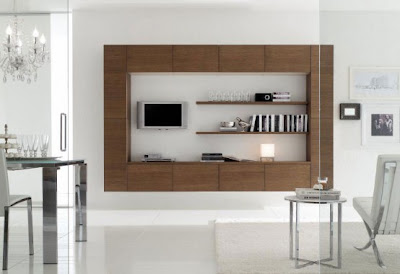 Stosa is an Italian kitchen manufacturer, which offers as modern as traditional models of very high quality. This year Stosa has enriched its modern kitchen range by four new beautiful collections. Among these collections you could find an awesome kitchen solution for a black and white kitchen design. This modern kitchen is a model from Bring collection. The main idea of this kitchen design is a play of contrasts and asymmetric shapes. Its cabinets with non standard shape add the originality and at the same enlarge the storage space. The kitchens from this collection are also available in other different colors and in natural wooden finish.
Monday, May 10, 2010
New Modern Kitchen Design Ideas with White Cabinets
Stosa is an Italian kitchen manufacturer, which offers as modern as traditional models of very high quality. This year Stosa has enriched its modern kitchen range by four new beautiful collections. Among these collections you could find an awesome kitchen solution for a black and white kitchen design. This modern kitchen is a model from Bring collection. The main idea of this kitchen design is a play of contrasts and asymmetric shapes. Its cabinets with non standard shape add the originality and at the same enlarge the storage space. The kitchens from this collection are also available in other different colors and in natural wooden finish.
Sunday, May 9, 2010
Modern Bathroom Designs from Rexa

Modern Bathroom Designs

Modern Bathroom Designs Ideas

Bathroom Designs Ideas

Modern Bathroom Designs Ideas

Modern Bathroom Designs Ideas

Modern Bathroom Interior Design

Modern Bathroom Interior Design
Rexa must be born very recently but its collections are par excellence. With a vision of having long-lasting bathrooms, this Italian company has carved a niche for itself in the world of bathroom manufacturers. Having introduced a number of new materials, the bathrooms which are part of the collections are spacious with freestanding, built-in bathtubs.
These concept bathrooms are inspired by the theme ‘Space Navigation’ where the entire collection beautifully comes together as each piece is vividly defined by the curves and smoothness. Everything found in these bathrooms is made of Korakril which guarantees sturdiness, hygiene, static-protection and resistance from lighting and stain.
Rexa designs are powerful and effective. They have encapsulated the essence of good taste and great quality.
Monday, May 3, 2010
New Modern Kitchen Design Ideas with White Cabinets
Stosa is an Italian kitchen manufacturer, which offers as modern as traditional models of very high quality. This year Stosa has enriched its modern kitchen range by four new beautiful collections. Among these collections you could find an awesome kitchen solution for a black and white kitchen design. This modern kitchen is a model from Bring collection. The main idea of this kitchen design is a play of contrasts and asymmetric shapes. Its cabinets with non standard shape add the originality and at the same enlarge the storage space. The kitchens from this collection are also available in other different colors and in natural wooden finish.Sunday, May 2, 2010
Luxury Bedroom Designs | Bedroom interiors
Are you need modern bedroom design for your interior home. bedroom as place for relax and spending much time on it we have to make our bedroom as comfortable place for sleeping.These are few modern bedroom which may inspired you to get your imagination.This modern bedroom design with variegated wood furniture and furnishings for a pleasantly mixed aesthetic experience. At the opposite end of the spectrum, how would you like to have your bedroom be in the middle of your pool room? You would have to loving swimming to be willing to deal with the moisture issues and harsh lighting that would come with this design strategy.
Subscribe to:
Posts (Atom)